
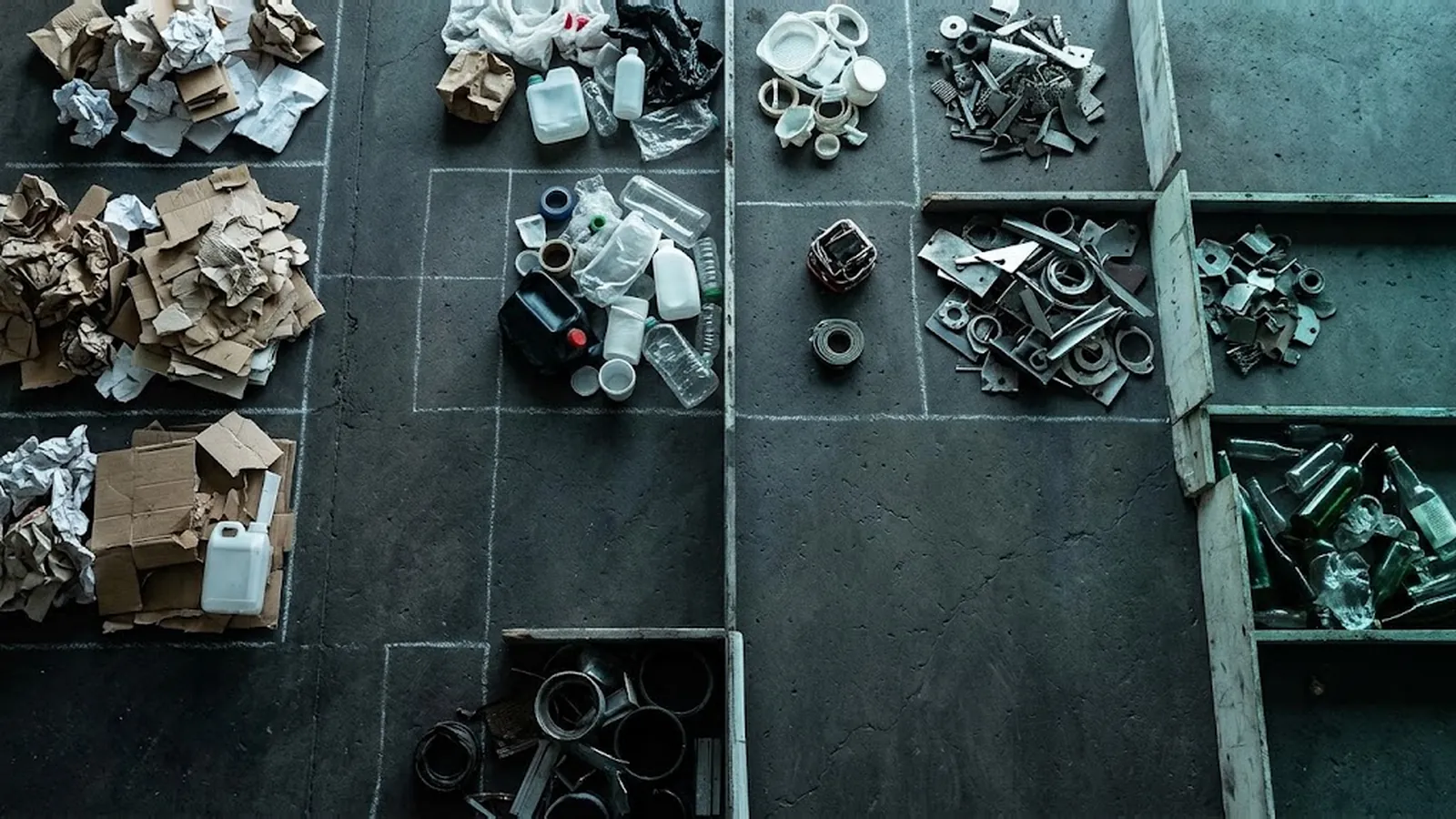
A waste audit is often imagined as someone going through bins. That part exists, but it is the smallest component. The purpose is to establish what your operation generates, where it originates, where it currently goes, and which of those paths can change — with enough evidence that the answer survives scrutiny.
What gets examined
The material streams themselves. What is generated, in what quantity, and in what condition. Condition matters more than most people expect: the same material clean and the same material contaminated have entirely different destinations and values.
The points of origin. A stream is rarely one thing. Packaging waste from goods inwards, production offcuts and office consumables all end up in the same container and leave as one line on an invoice. Separating them by origin is what makes reduction possible, because each origin has a different owner and a different fix.
The current destinations. Where material goes once collected, who handles it, and what evidence exists for that journey. Frequently the honest answer is that nobody at the site knows beyond the collection point.
The handling in between. Who moves the material, into what, how often, and what happens when the designated container is full. Segregation systems usually fail at this step rather than at the point of disposal.
What data gets collected, and how
| Source | What it tells you | What it misses |
|---|---|---|
| Weighbridge or weighed collections | Actual mass leaving site | Nothing, where it exists — this is the strongest source |
| Contractor invoices | What was collected and charged | What was generated; often estimated, not weighed |
| Container counts and fill levels | Volume and frequency | Density varies widely by material and compaction |
| Sampling and characterisation | Composition of a mixed stream | A snapshot; sensitive to the day chosen |
| Site observation and interviews | Why things happen the way they do | Not quantitative on its own |
No single source is sufficient. Invoices tend to be available and weak; weighed data tends to be strong and partial. An audit worth paying for states which source produced which number.
What you receive
- A baseline by material stream, with the method and period stated
- A map of origins showing where each stream is generated, not just where it is collected
- Identified opportunities, separated into changes requiring no capital, changes requiring
investment, and changes dependent on a third party
- The evidence basis for each figure, so a sustainability team can defend it later
- A sequence — what to do first, what it depends on, and who owns it
How to prepare
Gathering four things before the first visit saves time and improves the output:
- Twelve months of waste contractor invoices, including line items rather than totals
- A site plan marking where containers sit and where material is generated
- Production or throughput data for the same period, so waste can be expressed per unit rather
than as an absolute that moves with output
- A list of what has already been tried, including what did not work and why
That last one is consistently the most valuable and the least often offered.
What an audit cannot do
It cannot establish a certified figure — certification is a separate process run by a separate body. It cannot promise a diversion percentage before the data exists. And it cannot fix a stream whose destination depends on infrastructure that does not exist in your region; in that case the honest output is that the material is currently constrained, and the useful work moves upstream to generating less of it.
Before you commission one
Ask yourself which decision the audit is meant to inform. An audit commissioned to satisfy a reporting requirement looks different from one commissioned to cut cost, which looks different again from one commissioned to redesign a process. The scope should follow the decision.
Which decision are you trying to make? Tell us that first — it determines whether an audit is the right instrument at all.
Written by ezero-waste. Any measured result carries its own scope and evidence.
Common questions
How long does an audit take?
Typically four to six weeks, depending on site access and how much usable data already exists.
What should we prepare?
Twelve months of waste invoices with line items, a site plan, production data for the same period, and a list of what has already been tried.
Will it give us a certified figure?
No. Certification is issued by accredited bodies against defined standards. An audit gives you a defensible measured figure with its method stated.